
Introduction
For most North Carolina families, a single paycheck does a lot of work — covering the mortgage or rent, groceries, childcare, car payments, and the everyday costs of raising a household. Life insurance exists to make sure that work continues if the person earning that income is no longer there.
Many families know they should have coverage but feel stuck — unsure how much they need, which type of policy fits, or where to begin. The good news is that individual life insurance is more affordable and more flexible than most people expect, and unlike group plan coverage, an individual policy stays with you no matter what happens to a group plan.
This guide covers exactly what you need to know:
- How much coverage your family actually needs
- The difference between term, whole, and final expense policies
- How life insurance protects your income and your loved ones
- How to get accurate quotes
- Why working with an independent advisor helps you find the right fit
Key Takeaways
- Life insurance replaces lost income and covers debts, so your family can stay in their home and maintain their standard of living
- Term life is the most affordable option for most families; whole life builds cash value and lasts a lifetime; final expense covers funeral and end-of-life costs
- A common starting point for coverage is 10–12 times your annual income, adjusted for debts, future goals, and existing savings
- An individual policy belongs to you — unlike group plan coverage, it stays in force even if a group plan changes
- Working with an independent licensed advisor who shops multiple carriers helps NC families find the right coverage at competitive rates
Why Life Insurance Matters for North Carolina Families
The purpose of life insurance is simple: it replaces the financial support a family loses when a loved one passes away. That support is often larger than people realize once you add up a mortgage, years of household expenses, childcare, and education costs.
The Income Replacement Problem
Consider what your household depends on each month. If the primary earner were gone, the surviving family would still face the mortgage or rent, monthly bills, and the cost of raising children — often for many years. A life insurance death benefit is designed to close that gap, giving your family the time and stability to grieve without being forced into immediate financial decisions like selling the family home.
Protecting More Than Income
Life insurance does more than replace a paycheck. It can:
- Pay off the mortgage so your family can stay in their home
- Clear outstanding debts like car loans, credit cards, or co-signed student loans
- Fund future goals such as a child's college education
- Cover final expenses, including funeral costs and medical bills
- Replace a stay-at-home parent's contributions, such as childcare and household management, which carry real costs to replace
Why Coverage Is Often More Affordable Than Expected
Many people overestimate the cost of life insurance, sometimes by a wide margin. For a healthy adult, a term life policy can often be secured for the price of a few coffees a month. The earlier and healthier you are when you apply, the lower your premium — and once a term policy is issued, the rate is typically locked in for the length of the term.
How Much Life Insurance Do You Need?
Before choosing a policy type, it helps to estimate how much coverage your family would actually need. There's no single right answer, but a few approaches make the math manageable.
A Common Starting Point
Many advisors suggest coverage of roughly 10 to 12 times your annual income as a baseline. For a household earning $70,000 a year, that points to somewhere between $700,000 and $840,000 in coverage. This is a starting estimate, not a final number — your situation may call for more or less.
Add Up the Real Numbers
A more precise method is to total what your family would need and subtract what they already have. A simple framework:
- Income replacement: annual income multiplied by the number of years your family would need support
- Debts: mortgage balance, car loans, credit cards, and any co-signed loans
- Future goals: college costs, and other long-term plans
- Final expenses: funeral, burial, and any outstanding medical bills
- Subtract existing assets: current savings, investments, and any coverage you already have
The remaining figure is a reasonable estimate of the gap a policy should fill.
Revisit Coverage as Life Changes
Your needs aren't fixed. Major life events — marriage, a new baby, buying a home, or a significant change in income — are natural moments to review your coverage and make sure it still matches your family's reality.
Term vs. Whole vs. Final Expense: Choosing the Right Type
The three policy types families consider most often serve different purposes. Understanding the differences makes it far easier to choose.
Term Life Insurance
Term life provides coverage for a set period — commonly 10, 20, or 30 years — and pays a death benefit if you pass away during that term. It's the most affordable type and a strong fit for families who want maximum protection during the years they need it most, such as while raising children or paying down a mortgage.
- Best for: income replacement and covering temporary obligations like a mortgage
- Strengths: lowest cost for the highest coverage; simple and predictable
- Consideration: coverage ends when the term expires unless renewed or converted
Whole Life Insurance
Whole life is a form of permanent coverage that lasts your entire life as long as premiums are paid. It also builds cash value over time, which grows on a tax-deferred basis and can be borrowed against. Premiums are higher than term, but the coverage never expires.
- Best for: lifelong protection, estate planning, and those who want a cash-value component
- Strengths: permanent coverage; builds cash value; level premiums
- Consideration: significantly higher premiums than term for the same death benefit
Final Expense Insurance
Final expense (sometimes called burial insurance) is a smaller permanent policy designed specifically to cover funeral costs, burial, and end-of-life medical bills. Coverage amounts are modest, and the application process is usually simpler, which makes it accessible for older adults.
- Best for: covering funeral and end-of-life costs without burdening family
- Strengths: easier to qualify for; smaller, affordable premiums
- Consideration: lower coverage amounts; not designed for income replacement
Many families combine types — for example, a large term policy to cover the working years plus a smaller permanent policy for lifelong needs. An independent advisor can help you weigh which mix fits your budget and goals.
What Affects Your Life Insurance Rates?
Life insurance pricing is individualized. Several factors determine the premium you'll be offered:
- Age: the younger you are when you apply, the lower your rate
- Health: current health, medical history, and conditions are reviewed during underwriting
- Tobacco use: smokers typically pay substantially more than non-smokers
- Coverage amount and term length: larger benefits and longer terms cost more
- Policy type: term is the most affordable; permanent coverage costs more
- Lifestyle factors: some high-risk hobbies or occupations can affect pricing
Because every carrier weighs these factors differently, the same person can receive very different quotes from different insurers — which is exactly why comparison shopping matters.
How to Get Life Insurance Quotes in North Carolina
Getting accurate quotes is more straightforward than many people assume. A simple path:
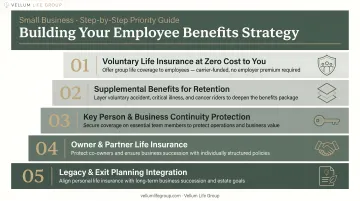
- Estimate your coverage need using the income-replacement and debt framework above
- Decide on a policy type — term, whole, or final expense — based on your goals and budget
- Gather basic information — age, general health, tobacco use, and the coverage amount you want
- Compare quotes across multiple carriers rather than accepting the first offer
- Complete the application and underwriting — some policies are approved quickly, while others may involve a brief health questionnaire or exam
The most important step is comparison. Because carriers price the same applicant differently, shopping multiple insurers is the single best way to find dependable coverage at a competitive rate.
Why Work with an Independent Advisor
You can buy life insurance directly from a single company, but that limits you to one carrier's products and pricing. An independent licensed advisor works on your behalf, comparing policies across many insurers to match you with the right coverage.
Two Problems, One Solution
An independent advisor helps with both of the hardest parts of buying life insurance: figuring out how much and what type you need, and finding which carrier offers the best rate for your situation. Rather than fitting your family into one company's product, an advisor shops the market for the policy that actually fits.
Vellum Life Group works with North Carolina families to find the right term life insurance and permanent coverage for their needs. Eva Ikonomakos places policies with 15+ A-rated carriers (including Mutual of Omaha, Transamerica, Aflac, and Corebridge Financial), and many policies are approved same-day or within a few days.
A few things make it easier to move forward:
- Multiple carriers compared — coverage shopped across 15+ A-rated insurers for the best fit
- Fast approvals — many policies are approved same-day or within a few days
- Personalized guidance — coverage amount and policy type reviewed for your family's situation
- No pressure — a transparent process with clear options, no sales tactics
To get started, contact Eva directly at 917-363-3554 or info@vellumlifegroup.com, or book a free consultation at calendly.com/eva-ikonomakos/30min.
Frequently Asked Questions
How much life insurance does my family need?
A common starting point is 10 to 12 times your annual income, then adjusted for your debts, future goals like college, and existing savings. The most accurate approach is to total your family's needs — income replacement, debts, and final expenses — and subtract assets you already have. An independent advisor can help you run those numbers.
Is term or whole life insurance better for a family?
It depends on your goals. Term life is the most affordable and a strong fit for covering income and a mortgage during your working years. Whole life costs more but provides lifelong coverage and builds cash value. Many families use term for the bulk of their protection and add a smaller permanent policy for lifelong needs.
How much does life insurance cost in North Carolina?
Cost depends on your age, health, tobacco use, coverage amount, and policy type. For a healthy adult, term life is often very affordable — frequently the price of a few coffees a month. Because carriers price the same applicant differently, comparing quotes across multiple insurers is the best way to find a competitive rate.
What is final expense insurance?
Final expense insurance is a smaller permanent policy designed to cover funeral, burial, and end-of-life medical costs. Coverage amounts are modest and the application is usually simpler, which makes it accessible for older adults who want to avoid leaving those costs to family.
Why should I use an independent advisor instead of buying directly?
Buying directly limits you to one company's products and pricing. An independent advisor compares policies across many A-rated carriers on your behalf, helping you choose the right coverage amount and policy type — and find the insurer offering the best rate for your situation.
Does an individual life insurance policy stay with me if I change jobs?
Yes. Unlike group plan coverage, an individual policy belongs to you. It stays in force regardless of your coverage status, as long as you keep paying the premiums — giving your family consistent, portable protection.