
A life insurance death benefit exists specifically to provide stability after a loss. It doesn't arrive automatically, though, and a little knowledge goes a long way. This guide explains, in plain terms, what a death benefit actually is, who receives it, how it generally reaches beneficiaries, what the payout options look like, and the simple steps families can take now to be prepared.
Key Takeaways
- Death benefits go to named beneficiaries — not automatically to spouses or children unless they're designated on the policy
- A benefit isn't paid automatically; a named beneficiary generally provides a death certificate and a simple form to the insurer
- Most benefits are paid within 30 to 60 days once everything has been submitted
- Payout options include lump sum, installments, or annuity — each affects taxes, timing, and long-term financial security differently
- Keeping beneficiary designations current and sharing policy details with loved ones makes everything easier when it matters most
Understanding Life Insurance Death Benefits
A death benefit is the core feature of any life insurance policy: a sum paid to designated beneficiaries when the insured person dies. When you hear someone say they have a "$500,000 policy," that figure is the death benefit — the amount their beneficiaries would receive.
Who's Who in a Life Insurance Policy
Four roles exist in every life insurance policy, and they're not always the same person:
- Policyholder — owns and controls the policy, can change beneficiaries
- Insured — the person whose death triggers the payout
- Payor — whoever pays the premiums (often the same as the policyholder)
- Beneficiary — receives the death benefit
One distinction that catches many families off guard: an heir is assumed by law, but a beneficiary must be explicitly named in the policy. The death benefit does not automatically go to a spouse or child — it goes to whoever is listed on the policy. A will doesn't change this.
How Death Benefits Work Across Policy Types
Whether the policy is term, whole, or universal life, the way a benefit reaches beneficiaries is largely the same. One point that surprises many policyholders: whole life policies build cash value over time, but beneficiaries receive the death benefit — not the cash value. Per Investopedia's explanation of cash value life insurance, the insurer typically retains accumulated cash value upon the policyholder's death unless the policy has a specific provision otherwise.
Death benefits can also be split among multiple beneficiaries in any proportion the policyholder chooses — 50% to a spouse, 25% to each of two children, for example. Charities and trusts can be named as beneficiaries too.
How a Death Benefit Generally Reaches Beneficiaries
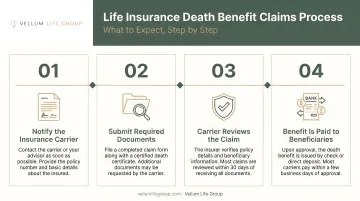
Death benefits are not paid automatically. A named beneficiary generally needs to let the insurer know — and many families simply don't realize a policy exists. Understanding the general flow ahead of time takes a lot of the mystery out of it.
Knowing Where the Policy Is
Much of the worry families feel comes down to one thing: not knowing whether a policy exists or where to find it. Helpful places to keep or look for policy details include:
- Personal files, filing cabinets, and safe deposit boxes
- Email accounts (a search for the insurer's name or "life insurance" often helps)
- An attorney, accountant, or benefits administrator (for group plan coverage)
If a policy can't be found, the NAIC Life Insurance Policy Locator is a free tool that submits a search to participating insurance companies. It's designed specifically for locating policies on deceased individuals.
If a policy goes unclaimed, insurers are generally required to turn those funds over to the state as unclaimed property. Families can search state unclaimed property databases — the NAUPA's MissingMoney.com searches multiple states at once. There's no hard national deadline to claim escheated funds, but sooner is always better.
What's Usually Involved
To start the process, a beneficiary will typically gather:
- The insurance company's name and contact information
- The policy number
- A certified death certificate showing the cause of death
- A completed Request for Benefits form (provided by the insurer)
- Proof of identity as the named beneficiary
After receiving everything, insurers in most states have roughly 30 days to review before they approve payment, deny it with an explanation, or request additional information. California's Insurance Code, for example, specifies that proceeds should be paid within 30 days of the insured's death where possible.
It's also worth knowing that generally only a named beneficiary — or someone with valid legal authority — can request a benefit; not every family member automatically qualifies. Keeping these details organized ahead of time is one of the kindest things a policyholder can do for the people they love.
Payout Options: How the Death Benefit Can Be Received
Beneficiaries typically have a choice in how they receive the money — and that decision carries real financial weight. There's no rush; it's worth taking time to think through each option.
Lump Sum Payment
The most common option. The full benefit is paid at once, giving complete flexibility to pay off debts, cover living expenses, invest, or set money aside for future needs.
The flexibility is genuinely valuable, but so is getting guidance before making large financial decisions. Talking with a trusted financial advisor before major spending decisions can help avoid choices that might be regretted later.
Installment Payments
The insurer holds the funds in an interest-bearing account and sends periodic payments. Amounts can often be adjusted, which provides useful structure for anyone concerned about drawing down a large sum too quickly.
The trade-off: the principal will eventually run out. If income that lasts indefinitely is the goal, another option may serve better.
Annuity
Some insurers offer the option to convert the death benefit into a guaranteed income stream that doesn't run out. This structure can work well for older beneficiaries who want predictability and don't need a large upfront sum. For younger survivors who need to replace decades of income, the payments may fall short of what a lump sum could generate if invested.
A Note on Taxes
According to the IRS, life insurance death benefits are generally income tax-free for beneficiaries. However, any interest earned on funds held in an installment account is taxable. A tax advisor can help explain how a specific situation is affected.
What Can Affect the Timing or Amount of a Payout
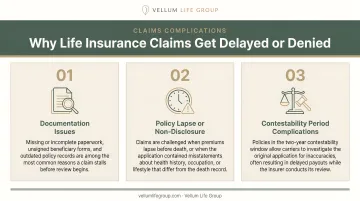
Most benefits are paid smoothly, but a few circumstances can affect the timing or the amount beneficiaries receive. Knowing about these in advance can prevent surprises.
Common Causes of Delay
- Contestability period — If the insured dies within the first two years of the policy, the insurer has the right to review the original application for misrepresentation. If omitted information would have prevented the policy from being issued, the insurer may void the contract and return premiums rather than pay the benefit.
- Fraud or misrepresentation on the original application — if an insurer discovers intentional false statements, it may decline the benefit and return only the premiums paid
- Manner of death — Deaths involving circumstances that require investigation may take longer to process
What Can Reduce the Benefit
- Outstanding policy loans — If a policyholder borrowed $100,000 against their whole life policy and never repaid it, that amount plus any accrued interest reduces what beneficiaries receive, per Northwestern Mutual
- Accelerated death benefit rider usage — If the insured used this rider before death to access funds during a terminal illness, the death benefit paid to beneficiaries is reduced by that amount
What Can Result in a Denial
These situations are rare, but worth knowing:
- The slayer rule — A beneficiary who feloniously caused the insured's death cannot collect the benefit (Georgia law and similar statutes in other states enforce this)
- Suicide within the first two years of the policy — Most policies include this exclusion
- Acts of war — Some policies exclude deaths resulting from war or military conflict
What Families Can Do Now to Be Prepared
The single most protective thing a policyholder can do is this: tell your beneficiaries they're named on the policy, where the documents are, and which company holds it.
According to the NAIC, its Life Insurance Policy Locator has helped connect consumers with more than $10 billion in unclaimed benefits since it launched — money that went unclaimed largely because beneficiaries didn't know the policy existed.
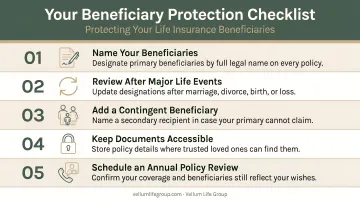
A Practical Checklist for Policyholders
- Update beneficiary designations after every major life event: marriage, divorce, birth of a child, death of a previously named beneficiary
- Verify contact information for beneficiaries is current with the insurer
- Review the policy annually — coverage amounts and beneficiary designations can become outdated fast
- Store policy documents with your estate planning materials and tell someone where they are
- Don't rely on your will — beneficiary designations on life insurance policies override wills
Taking a little time now — choosing the right coverage for your family and keeping your designations current — means your loved ones won't have to guess later. Eva Ikonomakos at Vellum Life Group works with individuals and families on annual policy reviews and no-pressure planning guidance, so the people you care about are well prepared for the future.
Frequently Asked Questions
What is the $10,000 death benefit?
A $10,000 death benefit typically refers to a final expense or burial insurance policy (a type of whole life insurance designed to cover end-of-life costs like funeral and burial expenses). Final expense policies commonly offer coverage ranging from $5,000 to $25,000.
How long does it take to receive a life insurance death benefit?
Most benefits are paid within 30 to 60 days once everything has been properly submitted. Delays can occur if the death falls within the two-year contestability period, if documentation is incomplete, or if the manner of death requires additional review.
Are life insurance death benefits taxable?
Death benefits are generally income tax-free for beneficiaries under IRC Section 101(a). However, interest earned on funds held in a retained asset or installment account is taxable. Consult a tax advisor for your specific situation.
Can a beneficiary be denied a life insurance payout?
Yes, though it's uncommon. Reasons include policy lapse due to missed premiums, fraud or misrepresentation on the application, the contestability period, or the slayer rule.
What happens to a life insurance policy if there is no named beneficiary?
If no beneficiary is named — or all named beneficiaries have predeceased the insured — the death benefit typically goes to the insured's estate. From there, it passes through probate, which can delay the payout and potentially expose the funds to creditors.
How do I find out if I'm named as a life insurance beneficiary?
Check with the deceased's family members, attorney, or prior plan administrators. You can also use the free NAIC Life Insurance Policy Locator to search participating insurers for any policies in the deceased's name.